
RENplusHOMES project: positive energy homes
RENplusHOMES develops a toolbox with 23 instruments, including building techniques, software and circular methodologies for turning residential buildings into positive energy buildings, able to produce more energy than they consume and pour the surplus into the network. These instruments are tested and implemented in four large-scale demonstration projects in Austria, Spain, Estonia and Romania, covering both new construction and renovation.

procuRE project: innovative solutions to achieve 100% renewable energy supply in existing buildings
After an Open Market Consultation phase, different suppliers have proposed renovation packages comprising advanced components and services from design to implementation and day-to-day operation. Two consortia have been selected from the candidates to deploy their solutions in six existing public buildings in five countries. ITeC participates in this testing phase where the real-life performance of the renovation packages is going to be measured, assessed and fine-tuned.

Training course on nZEB for public administrations
Compliance with the Spanish nZEB near-zero consumption standards in new buildings and major renovations is no longer voluntary since it is becoming progressively mandatory. The buildings belonging to or occupied by public administrations are expected to be the first ones in the process, which means that the personnel in charge of prescribing, tendering and managing these projects should be familiar with nZEB criteria. ITeC is carrying out training courses specifically aimed at this profile of public employees.
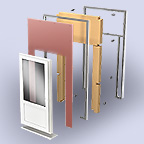
PLURAL project: energy renovation with industrialized 'plug & play' façade components
The renovation kits developed by PLURAL integrate different renewable energy technologies, so they become part of the building at the same time as the façade is renewed. A complementary tool will facilitate decision-making for project designers, directing them to the kits most suitable for the building, the climate and the occupants. It will also reduce manufacturing costs and reduce delivery times.
POCITYF project: smart cities prioritizing energy and heritage issues
POCITYF (A Positive Energy CITY Transformation Framework) is a EU-funded project for transforming European cities into more efficient, healthy, sustainable living environments with “positive energy districts”, this is, groups of buildings that actively manage their energy consumption and the energy flow between them and the wider energy system. The overall aim is to help cities deliver positive energy districts while respecting their mixed urban settings that often include heritage assets.

Pilot test to renovate a public school building aimed to near zero energy consumption
Based on the results of a blower door test, the analysis will look for the best way to correct the building deficiencies of the school and reduce its energy demand according to Passivhaus criteria. The renovation also includes adding sensors in the school's electrical system that will provide data to evaluate the performance of the revamped facility, detect abnormal consumption and delve deeper into the consumption patterns of the building.

Houseful project: eco-innovation and circular economy in residential construction
In this European project new building solutions are developed to optimize generation of waste and consumption of water, energy and material resources throughout the whole life cycle of the building, to be demonstrated in four large apartment buildings. ITeC participates in the BIM aspects of the project and its monitoring, and in the creation of a methodology to quantify the degree of circularity of the building.
Development of the CTU indicator (Total Cost for the end-User) for energy efficiency
This new indicator contemplates the cost of the energy that a construction product or equipment consumes throughout its service life, as an addition to the acquisition cost used for preparing budgets. By crossing energy consumption with the energy source used in each case, it makes it possible to assess not just the monetary impact but also the environmental impact, in the form of greenhouse gas emissions and other local pollutants such as NOx and microparticles. The goal is to obtain the CTU of 6000 building elements.

SEEtheSkills project: meeting the demand for workers with energy-related skills
The European construction sector has a chronical deficit of skilled workers and SEEtheSkills aims to strengthen the knowledge and skills in one of the most estrategical fields: energy efficiency and renewable energy integration in buildings. To do so, the project will emphasize the transfer and replication of successful training schemes between countries, and also the visibility of the workers and trainers with the right know-how, creating an on-line database.
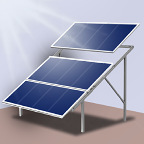
Characterization of systems for fixing photovoltaic panels on roofs
A company combines its own and third-party parts to build structures to install photovoltaic panels on building roofs and wants to check that they are suitable for this type of applications. ITeC has been approached to define which attributes must be measured, to prepare a testing plan and draw up a technical dossier with the results. The mechanical performance, electrical continuity and corrosion resistance have been analysed.