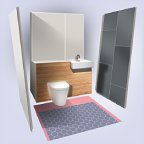
Evaluation of off-site building systems for bathrooms and kitchens
Drafting of an evaluation protocol according to European and Spanish regulatory criteria for industrialized systems for bathrooms and kitchens where wall-sized elements are delivered to the site with pre-fitted water, electricity and drainage pipes, as well as with the final surface finish.

InCUBE project: deep renovation, within easier reach
Assuming the premise that no two building renovations are the same, the InCUBE project brings together a wide range of construction products, energy systems, digital design tools and resources for site workers, which can be chosen and combined until they meet the goals and needs of each specific project. The InCUBE repertoire will be put to the test in three demo pilots with a very heterogeneous profile: residential or tertiary use, with or without heritage value, publicly- or privately-owned, occupied or empty during the renovation works...
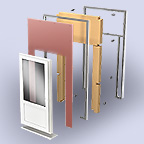
PLURAL project: energy renovation with industrialized 'plug & play' façade components
The renovation kits developed by PLURAL integrate different renewable energy technologies, so they become part of the building at the same time as the façade is renewed. A complementary tool will facilitate decision-making for project designers, directing them to the kits most suitable for the building, the climate and the occupants. It will also reduce manufacturing costs and reduce delivery times.
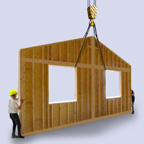
Contribution to the drafting of the European Assessment Document for timber building kits
CE marking of timber building kits has been carried out according to the criteria of the ETA Guideline ETAG 007, which was first published in 2001. This has changed with the European Regulation for construction products (EU) 305/2011, which required CE marking to be regulated by a European Assessment Document (EAD). ITeC has contributed to revise this ETAG and develop it into the EAD that the Technical Assessment Bodies of the whole EU will use to evaluate timber building systems based in large, prefabricated elements (walls, floors, roofs) produced in series.
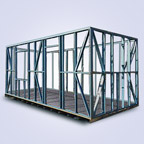
Assessment of industrialized building systems based on steel structures
Definition of an assessment protocol according to the European and Spanish regulatory criteria for industrialized building systems based on modules with a structure of metal profiles to be covered with panels that provide insulation and different finishes. It contemplates performance issues from different sides: structural, fire safety, user safety, thermal and acoustic insulation, hygiene, health, environment and durability.

Project EcoTimberCell: increasing environmental performance of buildings using industrialized wooden components
The goal of the project is to develop wooden components for industrialized building construction that can effectively replace the usual market alternatives in concrete and steel. The new components must provide a highly efficient thermal envelope for the buildings and also be commercially competitive, require a minimum of energy in their manufacture and generate a minimum of waste.
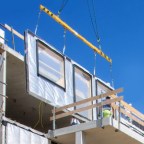
Life cycle analysis of a public housing development to be built with off-site techniques
A construction company was preparing a bid to compete for a public housing project and needed to include a life cycle analysis (LCA) of the proposed industrialized building. ITeC has been asked to carry out the LCA according to the conditions of the contracting body, who required to assess the manufacturing, construction, transport and end-of-life phases, to follow the UNE-EN-15978 standard and to justify the environmental data used for the calculation.
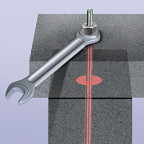
Assessment of clamping systems for precast concrete members
A precast concrete manufacturer has developed a clamping system that connects a beam with the column on which it rests and with the column on the upper storey, transmitting tensile, compression and shear forces. At the time of evaluating the system, it was not covered by any harmonized standard or by any EAD (European Assessment Document), so ITeC has drafted a new EAD to fill the legal gap, as allowed by the Construction Products Regulation (EU) 305/2011.
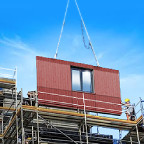
Impact of the Spanish Structural Code on prefabricated façade panels
A manufacturer of prefabricated facades needs to check if the new Structural Code in force in Spain since 2021 affects its product portfolio. On the one hand, the Code now includes the most relevant aspects of the European regulations (Eurocodes) for structural calculus. On the other hand, it cancels the concept of suitability for use of products with CE marking (inherited from Directive 89/106/EEC which is no longer in force) and replaces it with the presumption of veracity of the manufacturer’s declaration of product performance.
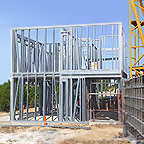
Assessment of the environmental impact of an off-site building system
A manufacturer of off-site building components wanted to assess the environmental impact of its products for enhancing the rigor of its commercial offer. ITeC has calculated it according to the Life Cycle Analysis ISO and EN standards using TCQiGMA software that assesses the emissions and the energy of the whole building, both in the manufacturing phase and in the construction phase.