Characterization of a “sandwich” block for non-load-bearing walls
A manufacturer is contemplating the production of precast elements for partition walls made with two concrete blocks enclosing a synthetic insulation core. Both the blocks and the insulation are regulated by harmonized standards, but the resulting product falls outside the scope of these EN standards. ITeC has been engaged to assess the product’s key performance characteristics (mechanical behaviour, thermal properties, fire resistance) as an initial step toward evaluating its market potential.

Analysis of building solutions for blockwork with cellular concrete blocks
Autoclaved aerated concrete blocks are regulated by the harmonized standard EN 771-4, but it merely defines the technical characteristics these products must meet, without addressing the correct method of building walls with them. Since this is a critical issue for these blocks, one manufacturer has requested ITeC to document appropriate building solutions for the different intended uses of these blocks.

Evaluation of a building system using blocks with recycled content
The manufacturer of prefabricated blocks lightweighted with agricultural waste has come to ITeC for advice on how to demonstrate their performance, given that the product differs substantially from those contemplated in section SE-F of the Spanish Technical Code (CTE). ITeC has drawn up a testing procedure consistent with both the nature of the product and CTE’s basic requirements.

Definition of construction solutions for a non-conventional ceramic piece
Clay pieces for partition walls are regulated by harmonised standards, but they do not cover the execution methods on site. The manufacturer of a piece with design particularities needed to define in detail the correct way of to build partitions with these products to make the most of their performance. ITeC has been asked to produce an evaluation document featuring a set of approved building details.

Assessment of a partition system for tall drywalls
A manufacturer offers a system for constructing non-load-bearing partitions up to 12 m high for non-residential buildings such as industrial and commercial facilities. Both the gypsum boards and the metal framing profiles carry their respective CE markings, but it is unclear whether the mechanical performance requirements they had to meet to obtain those markings are sufficient for this type of application. ITeC has been asked to define a method for assessing the structural stability of these tall partitions, taking into account potential impacts, eccentric loads, and horizontal loads arising from normal use or from potential exposure to wind.
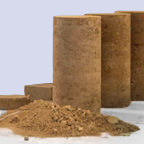
Characterization of the technical performance of a building solution with compressed earth
A manufacturer of a building system based on compressed earth block seeks advice on which which are the most critical technical parameters that have to be tested and documented in order to justify the compliance with the regulatory requirements. This will also smooth both the market entry and the future certification of the product.

Assessment of hinges for fire doors
Proper compartmentalization is key to fire safety in buildings. However, doors are potential weak points for compartmentalization, and in turn, hinges are potential weak point for fire doors. Specific hinges must be used on this type of doors, for which there are two evaluation protocols: the one defined in EN 1935 and the one in EAD 020001-01-0405. Looking for effective engagement within this highly specialized domain, a hardware manufacturer has requested ITeC's support in the CE marking process for their products.

CE marking of fire protective boards
The mineral boards used for fire compartmentalization and for increasing the fire resistance of load bearing elements remain outside the scope of harmonized standards such as EN 13403, EN 12101 or EN 13381. Therefore, the only alternative for CE marking these products is to obtain a European Technical Assessment (ETA) following EAD 350142-00-1106. A fire protective board manufacturer has asked ITeC for assistance with the overall strategy towards CE marking and with the assessment and verification of constancy of performance.

Assessment of glazing with fire-resistant properties provided by sprinklers
A manufacturer has developed a range of fire sprinklers that spray water into vertical glazing, providing a fire resistance period of up to 120 minutes. The specificity of the sprinkler's operating conditions and its field of application require an accurate and individualised assessment of the product for its intended use.

Assessment of modular partition systems
Drafting of an evaluation protocol according to European normative criteria for the systems for erecting partition walls in tertiary use buildings, focusing on those with a structure of aluminum profiles that supports opaque and glass panels. The analysis covers mechanical performance (impact resistance and stability), safety (fire reaction, emission of hazardous substances) and comfort (airborne sound insulation).