The Archive of Projects
This is a list of the main projects carried out by ITeC. The Project Topics menu allows you to narrow the list down according to the subjects covered.

Assessment of a maintenance and replacement plan to adjust it to the needs of the building
The company that has been contracted to maintain a group of public buildings has noticed that the Maintenance Plan and the Replacement Program defined by the administration that owns the buildings do not fully match the real needs and does not include all the procedures required by law. ITeC has been asked to make a proposal to improve the scope and periodicity of the maintenance and replacement work, making sure that it complies with the regulations and it fits all the needs of the buildings in question.
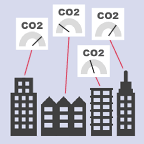
INDICATE project: collecting building-level WLC data in Europe
Europe is facing a big challenge when it comes to decarbonise its buildings: the lack of data to support policymaking and strategic business decision-making. The goal of INDICATE is to collect Whole Life Carbon (WLC) data from real buildings to support the demand for product-level life cycle assessment (LCA) and to set WLC benchmarks. Data collection must be coherent (all project partners will agree on a common methodology) and comprehensive (different building systems, climatic zones and use cases will be represented on the sample)

Exploitation of a construction product developed in an EU project
A company has developed a product during a R&D project granted with EU funding where a number of other partners have also collaborated. The product performance is promising enough for bringing it to the market. For this purpose, ITeC has prepared a Memorandum of Understanding (MoU) to make a formal agreement between the project partners for the joint intellectual property of the new product. It also defines a common line of action regarding protocols for product dissemination, product licencing, information exchange, profit share, reporting, confidentiality issues, and conditions for terminating the agreement.

Training course on nZEB for public administrations
Compliance with the Spanish nZEB near-zero consumption standards in new buildings and major renovations is no longer voluntary since it is becoming progressively mandatory. The buildings belonging to or occupied by public administrations are expected to be the first ones in the process, which means that the personnel in charge of prescribing, tendering and managing these projects should be familiar with nZEB criteria. ITeC is carrying out training courses specifically aimed at this profile of public employees.
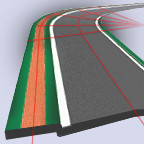
Implementation of the BIM methodology in a roadway project
A contractor has been awarded a road project and the contracting authority requires BIM to be used in the key phases of the work. ITeC has provided advice to create, update and manage the BEP (BIM Execution Plan), to make a pre-construction BIM model, to monitor the execution process with BIM monitoring and finally to deliver the as-built BIM model of the road.

Accord Project: automated check of compliance with requirements to expedite the issuing of construction permits
Getting construction permits is a bottleneck for the sector, and it could get worse if environmental verifications become increasingly demanding. The Accord project will develop tools to automate these procedures, using BIM to review CO2 emissions and circularity. ITeC provides its knowledge and experience in construction regulations and in BIM methodologies and tools (BIM libraries and software in the cloud) to ensure a proper operation of the new Accord tools.

InCUBE project: deep renovation, within easier reach
Assuming the premise that no two building renovations are the same, the InCUBE project brings together a wide range of construction products, energy systems, digital design tools and resources for site workers, which can be chosen and combined until they meet the goals and needs of each specific project. The InCUBE repertoire will be put to the test in three demo pilots with a very heterogeneous profile: residential or tertiary use, with or without heritage value, publicly- or privately-owned, occupied or empty during the renovation works...

Characterization of metal deck roof kits
Metal deck roofs combine load-bearing, insulating, waterproofing and fixing elements. The proper performance of the whole kit depends on it having been designed and built according to correct criteria. A manufacturer has asked ITeC to accurately draw up these criteria, quantify the performance of the kits and verify the compliance with regulatory requirements (Spanish Building Code, Fire Safety Code for Industrial Premises)

Assessment of glass tiles and mosaics for floors and walls
Despite the similarities between glass and ceramic tiles, the harmonized European standard (EN 14411) can only be applied to ceramic and stoneware products. This complicates the CE marking of these products, which must be done through a European Technical Assessment (ETA). ITeC can guide manufacturers thorough this process, assisting them in the drafting of their Manufacturer Technical Dossiers and Control Plans, in the testing phase and finally in the processing of the Evaluation.

Re-Plan City Project to promote construction materials obtained from tire recycling
The Re-Plan City project wants to expand the use of RTM (Recycled Tire Materials) products and applications for transport infrastructure (roads and railways), buildings (reinforced concrete with steel fibers for floors, rubber pieces for noise reduction, insulating fibers), street furniture and sports facilities. ITeC has contributed by developing guidelines for green public tenders aimed at public developers that see in RTM products an opportunity to improve the environmental footprint of their projects.